How to Build a Business Credit Profile in the UK
You do not have one business credit score, you have several. What actually moves them, the 30-day CCJ rule almost nobody mentions, and how to read your own file.


Dan had run his building firm for six years without a single late payment, so when the bank turned down a £40,000 facility he assumed there had been a mistake. There had — but it was on his file, not in their decision. An old business address, a director who left in 2021 still listed, and two years of accounts filed on the very last day. None of it was untrue enough to argue with, and all of it made his business credit score look worse than his business actually was.
| What moves your score | Weight |
|---|---|
| Payment history with suppliers and lenders | Heaviest single factor |
| CCJs, insolvency notices, late statutory filings | Serious negatives |
| Companies House filing history | On time and full beats late and thin |
| Age of the business | Helps steadily over time |
| How much of your credit you use | High utilisation counts against you |
You do not have one credit score. You have several
Image source: pexels.com
The first surprise for most owners is that there is no single official number. Several agencies each build their own file on your company from public records, trade payment data and whatever else they can gather, and each one scores it their own way. Experian, Creditsafe, Dun & Bradstreet and Equifax all hold something on you, and they rarely agree. That matters practically: a lender might pull the one file where an error sits, decline you, and never mention which agency it used. Dan had checked one report years earlier, seen nothing alarming, and assumed that was that. The address error was sitting on a different file entirely.
Why 65 at one agency is not 65 at another

Image source: pexels.com
Each agency runs its own model, so the numbers are not interchangeable. Experian and Creditsafe both use a nought to one hundred scale where roughly eighty and above reads as good. Dun & Bradstreet quietly assigns most UK limited companies a nine-digit D-U-N-S number and tracks you under it whether you asked or not. Equifax, unusually, does not publish a named methodology or public scale for UK businesses at all. So comparing a score from one against a score from another tells you very little. What matters is the direction each one is moving and whether the underlying facts are right. Chasing a single number across four agencies is wasted effort.
Paying on time is worth more than anything else you do

Image source: pexels.com
If you only fix one thing, fix this. Trade payment behaviour carries more weight than any other factor in the models, because it is the closest thing to a live signal about whether a business is coping. Suppliers report how you pay, and paying to terms consistently builds a picture that outlasts a bad quarter. The reverse is also true: quietly stretching payments to ease your own cash flow shows up, and it shows up faster than most owners expect. If you are stretching because money is genuinely tight, a proper cash flow forecast is a better answer than hoping nobody notices — and it is worth asking your main suppliers whether they report payment data at all, because plenty do not.
The CCJ rule almost nobody tells you about

Image source: pexels.com
This one is worth writing on the wall. A County Court Judgment sits on the public register for six years, and it stays visible even after you pay it — it simply gets marked satisfied. Even a small, settled judgment is a loud warning to anyone running a check. But there is a window. If you pay the judgment in full within 30 days of it being made, it is removed from the register altogether, as though it never happened. Thirty days is not long, and most people spend the first week of it being annoyed. If a judgment lands and you can clear it, clear it immediately.
Thirty days, in full, and it disappears. Pay a day late or a pound short and it is on your record for six years instead. This is the highest-value action in the whole of business credit.
Your filing habits say more than you think

Image source: pexels.com
Companies House is public, and the agencies read it closely. Filing on time helps, and filing at the last legal moment every year quietly reads as a business that is either disorganised or struggling. The less obvious point is that filing full accounts rather than abridged ones generally supports a better score, because agencies have more to work with. Most small companies do the opposite, filing the bare minimum on the assumption that privacy is safer. It is not, at least not here: when the numbers are missing, the model fills the gap pessimistically. If your figures are decent, showing them is an advantage, and keeping the books current makes filing early painless.
A change is coming, though the date keeps moving
Under the Economic Crime and Corporate Transparency Act, small companies and micro-entities were due to start filing a full profit and loss account, with abridged and filleted accounts scrapped and filing done through software rather than the free WebFiling service. That was set for April 2027. Then the government confirmed in January 2026 that the reforms were paused and under review, with the current rules staying in place, while other reporting points to a revised date of April 2028. In short: it is coming, the date is genuinely unsettled, and you should check the current position rather than plan around a headline. When it does land, every small company’s profitability becomes visible to the agencies.
Read your own file, then fix what is wrong
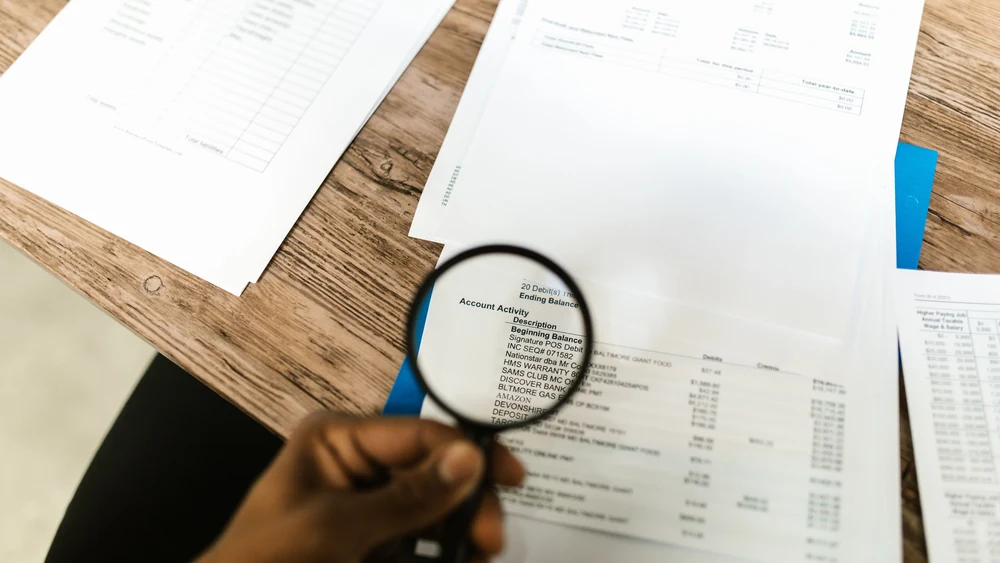
Image source: pexels.com
Start by checking, and check more than one agency. It costs nothing to look: Equifax gives directors a free statutory business report, Creditsafe offers registered directors a free report, and Dun & Bradstreet lets you see your risk score after a trial. Importantly, checking your own file does not damage it — that myth has drifted over from personal credit and it stops people looking. Then correct what is wrong. Old registered addresses, a stale SIC code that makes you look like a riskier industry, directors who resigned years ago: all common, all fixable, and all quietly costing you. This is exactly what had happened to Dan.
What a lender is really looking at

Image source: pexels.com
For an established company, the file largely speaks for itself. For a younger one, the honest truth is that lenders lean heavily on the director’s personal credit too, and often ask for a personal guarantee to bridge the gap. The two files are linked in practice even though they are separate on paper. Utilisation matters as well — running every facility at its limit reads as strain, even when you are paying perfectly. Keeping a proper business bank account with a clean trading history through it helps, and a stronger profile widens what is available to you, from asset finance to an overdraft or term loan.
Where Dan ended up
He corrected the address, removed the old director, filed the next set of accounts in full and two months early, and reapplied the following spring. Same business, same customers, same bank — and this time a yes. Nothing about the company had changed; only what the file said about it had. That is really the lesson with a business credit score: it is not a verdict on how good your business is, it is a summary of what you have made visible. Go and read yours this week, and be honest about how much of it you already control.
Frequently asked questions
What is a business credit score?
It is a rating agencies give your company based on payment history, public records and filings. Lenders and suppliers use it to judge how risky it is to give you credit.
How can I check my business credit score for free?
Equifax offers directors a free statutory business report, Creditsafe gives registered directors a free report, and Dun & Bradstreet shows a risk score after a free trial.
Does checking my own credit score lower it?
No. Checking your own business credit file does not harm it. That idea has carried over from personal credit and stops many owners from ever looking.
How long does a CCJ stay on a business credit file?
Six years, even once paid. But if you settle it in full within 30 days of judgment, it is removed from the register completely.
Do late Companies House filings affect my credit score?
Yes. Late or very thin accounts leave agencies with less to assess, so your company can look riskier and score lower than it deserves.
How long does it take to improve a business credit score?
Fixing errors can help within weeks. Building a payment record takes months, and business age helps steadily, so treat it as a year-long habit.
This article is general information, not financial advice. Scoring models, free report options and filing rules described reflect the position as at September 2026 and can change — the Companies House accounts reform date in particular is unsettled. Check directly with the agencies, Companies House or your accountant before acting.