Business Contracts: What Small Firms Get Wrong
A contract does not have to be long to be enforceable, and a handshake is not nothing. What matters is what was agreed and whether you can prove it.


Small businesses frequently operate on quotes, emails and conversations, then discover during a dispute that nobody agreed the same thing. Contracts are not primarily about winning arguments — they exist so that both sides understand the deal before the work starts.
A Contract Does Not Have to Be Signed
An agreement can be formed verbally or through conduct, and emails confirming terms frequently constitute one. The practical problem with informal agreements is not validity but evidence: proving what was agreed, when, and by whom.
Get the Basics in Writing
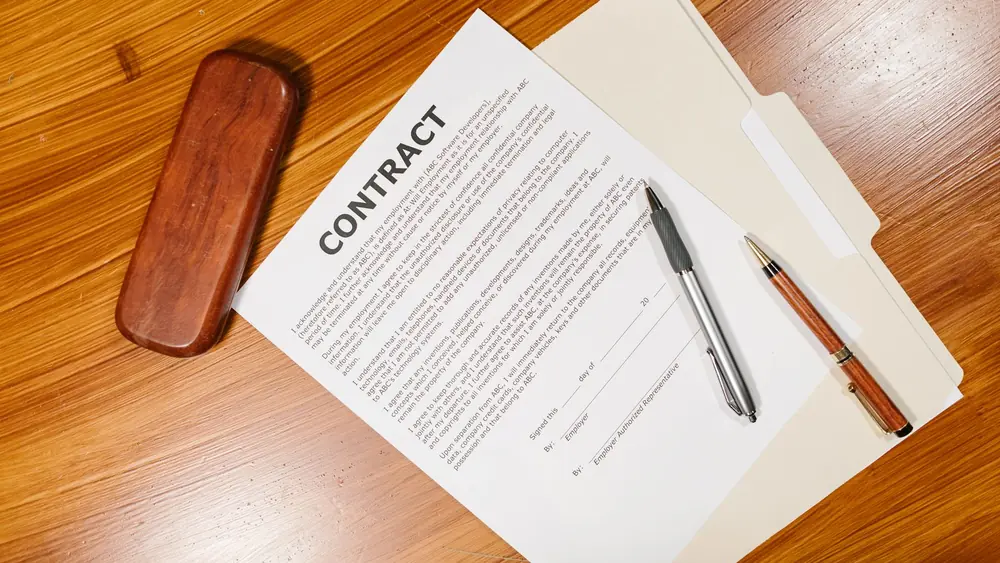
Image source: pexels.com
At minimum: what is being supplied, for how much, by when, on what payment terms, and what happens if either side wants to stop. A single page covering those five points prevents most disputes that small businesses actually have.
Define the Scope Precisely
Vague scope is the most common source of conflict. “Website redesign” means different things to each party. Specify what is included, how many rounds of changes, what counts as extra, and how extras are priced. Scope creep is far easier to manage when the boundary was drawn.
Payment Terms Belong in the Agreement
When payment is due, what triggers an invoice, whether a deposit is required, and what happens if payment is late. Agreeing this up front makes credit control straightforward and removes the awkwardness of raising it after the work is done.
Know Who You Are Contracting With
A contract with a limited company is not a contract with the individual behind it. Check the exact legal name and company number at Companies House, and make sure the contract names that entity. Suing the wrong party is a real and expensive mistake.
Limitation of Liability
Clauses limiting what you can be held responsible for are standard and enforceable within limits, particularly between businesses. What you cannot do is exclude liability for death or personal injury caused by negligence. If you supply anything where failure could be costly, this clause matters more than the price.
Keep a Signed Copy
An agreement neither party can produce is difficult to rely on. Store the executed version, with the date and who signed, somewhere findable rather than in an inbox.
Termination and Notice
How does either side end the arrangement, with how much notice, and what is payable for work already done? Ongoing arrangements without a termination clause are difficult to exit cleanly, and that is when relationships deteriorate.
Watch Automatic Renewal
Service agreements frequently renew automatically unless cancelled within a window. Businesses find themselves locked in for another year because nobody diarised the notice date. Record every renewal deadline when you sign.
Consumer Contracts Have Extra Rules
Selling to consumers brings statutory rights that cannot be written away — information requirements, cancellation periods for distance sales, and rules on unfair terms. Terms copied from a business-to-business template are frequently unenforceable against consumers.
Interest on Late Payment
UK businesses generally have a statutory right to claim interest and reasonable recovery costs on late commercial payments, whether or not the contract mentions it. Stating the position in your terms makes it visible to the customer and easier to invoke without it feeling like an escalation.
Read Other People’s Terms Too
When you sign a supplier or platform agreement, you accept their terms wholesale. Check notice periods, price change provisions, liability caps and who owns any intellectual property created. These are frequently more onerous than anything you would ask of a customer.
Force Majeure and Things Outside Control
Clauses covering events neither party controls — supply failures, extreme weather, restrictions — determine what happens when performance becomes impossible. Small businesses rarely include one and then have no agreed position when something genuinely prevents delivery.
Keep the Paperwork Together
The signed agreement, any variations, and the correspondence agreeing changes all form part of the deal. Storing them in one place, rather than across three inboxes, is what makes a dispute manageable rather than chaotic.
Quotes, Estimates and Which You Gave
A quote is generally a fixed price you are bound by once accepted; an estimate is an informed guess that can move. Using the words interchangeably causes disputes when the final figure differs. Say which you are giving, and if it is an estimate, say what would change it.
Variations Need Agreeing Before the Work

Image source: pexels.com
Additional work agreed verbally mid-project is the most common cause of unpaid invoices. A short message confirming the extra scope and cost, and getting a reply, converts an argument into a record. Doing it before the work is what makes it enforceable in practice.
Retention of Title and Ownership
If you supply goods, a clause stating that ownership passes only on full payment gives you a position if the customer fails to pay or becomes insolvent. Without one, goods delivered become the customer’s asset immediately.
Which Law and Which Courts
For customers outside the UK, specify which country’s law applies and where disputes are heard. Without it you may find yourself pursuing a claim in an unfamiliar jurisdiction, which is frequently uneconomic regardless of the merits.
Confidentiality Where It Matters
If a customer or supplier will see genuinely sensitive information — customer lists, pricing structures, technical detail — a confidentiality clause or separate agreement is worth having. It will not stop determined misuse but it establishes that the information was given in confidence, which matters if it is ever contested.
Assignment and Subcontracting
Can the customer transfer the contract to someone else, and can you subcontract the work? Both should be addressed rather than assumed. Customers occasionally object to work being subcontracted, and finding that out mid-project is unhelpful.
Templates Are a Starting Point
Free templates are better than nothing and worse than something drafted for your trade. If you use one, read every clause and delete what does not apply — inherited clauses referring to circumstances you never encounter make the document look unconsidered.
When to Involve a Solicitor
Funding Documents Are Contracts Too
Early-stage investment paperwork is frequently signed with less scrutiny than a supplier agreement, which is the wrong way round. Convertible loan notes and ASAs carry terms that decide what a founder owns later.
Terms Are What You Enforce Later
Payment terms, interest on late payment and a clear specification are what make a debt recoverable. The practical routes are set out in recovering unpaid debts, and they all start with what the contract says.
For routine, low-value work a clear template is adequate. For anything long-term, high-value, or where failure would seriously damage the business, a solicitor reviewing the terms costs a small fraction of what the dispute would.