Venture Capital vs Angel Investors: What’s the Difference?
Learn the difference between Venture Capital vs Angel Investors. Understand funding stages, benefits, and which option is best for your startup.

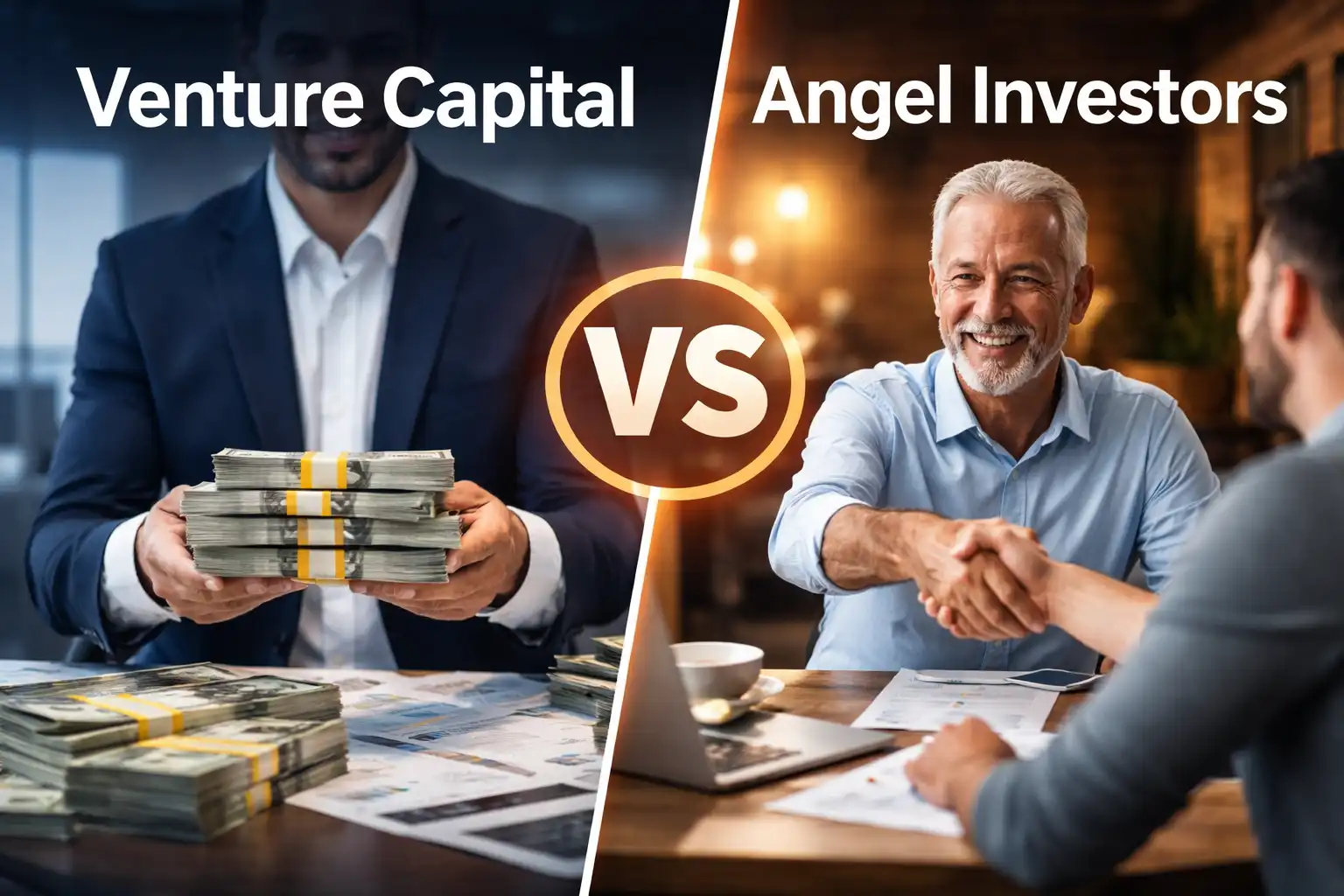
When startups begin exploring external funding, two terms appear almost immediately: venture capital and angel investors. Both represent important sources of startup funding, and both involve investors providing capital in exchange for equity.
However, the way these investors operate — and the stage at which they invest — can be very different.
Many founders initially assume that venture capital and angel investing are interchangeable. In reality, they serve different purposes within the startup ecosystem. Angel investors often support companies at the earliest stages, while venture capital firms typically invest once a startup begins demonstrating significant growth potential.
Understanding the differences between venture capital vs angel investors can help entrepreneurs choose the funding option that best fits their business stage and long-term strategy.
In this guide, we’ll explore how these two funding sources work, how they differ, and when startups typically approach each type of investor.
What Are Angel Investors?
Angel investors are individuals who invest their own money into startups.
These investors are often experienced entrepreneurs, executives, or high-net-worth individuals who want to support new businesses while also earning a potential return on their investment.
Angel investors typically invest in the early stages of a startup’s development. At this point, the business may still be building its first product, validating its market, or assembling its founding team.
Because angel investors use their personal funds, they often make smaller investments than venture capital firms.
However, angel investors can offer significant value beyond capital. Many angels bring industry experience, mentorship, and connections that help founders navigate the early stages of building a company.
What Is Venture Capital?

Image source: pexels.com
Venture capital refers to funding provided by professional investment firms that specialise in financing high-growth startups.
Unlike angel investors, venture capital firms manage pooled funds from institutions such as pension funds, corporations, and wealthy investors.
These funds are then invested in startups that demonstrate strong growth potential and the ability to scale rapidly.
Venture capital investments are usually larger than angel investments and often occur once a startup has demonstrated traction, built a product, and begun attracting customers.
Because venture capital firms manage large investment portfolios, they follow structured processes when evaluating startups and making funding decisions.
Key Differences Between Venture Capital and Angel Investors
While both venture capitalists and angel investors fund startups, their investment approaches differ in several ways.
| Feature | Angel Investors | Venture Capital |
| Source of Funds | Personal wealth | Investment funds from institutions |
| Investment Size | Smaller investments | Larger investments |
| Startup Stage | Early-stage or pre-seed | Growth-stage startups |
| Decision Process | Often informal | Structured investment process |
| Investor Involvement | Mentorship and guidance | Strategic and operational support |
These differences influence when and how startups typically approach each type of investor.
Angel investors often provide the first external funding a startup receives, while venture capital firms typically invest after the business has demonstrated potential for rapid growth.
When Startups Seek Angel Investment
Angel investment is most common during the earliest stages of a startup’s development.
At this point, the business may still be developing its product or validating its idea in the market.
Because traditional lenders rarely provide funding to startups without revenue or collateral, angel investors fill an important gap in early-stage financing.
Angel investors often support founders who have strong ideas but limited financial resources.
In many cases, angels invest not only because they believe in the business but also because they want to mentor new entrepreneurs.
For first-time founders, this guidance can be extremely valuable.
When Startups Seek Venture Capital
Once a startup begins gaining traction, it may pursue venture capital funding to accelerate growth.
Venture capital firms typically invest in companies that have already demonstrated product-market fit and have the potential to scale quickly.
Funding raised from venture capital can support activities such as expanding the team, increasing marketing efforts, or entering new markets.
Because venture capital investments are larger, they often come with more formal governance structures.
For example, venture capital firms may take board seats and play an active role in shaping the company’s strategic direction.
Many founders exploring venture capital also consider other funding routes when building their financial strategy.
Advantages of Angel Investors
Angel investors offer several advantages for early-stage startups.
One key benefit is flexibility. Angel investors often make decisions quickly and may be more willing to support unconventional ideas.
Because angels invest their own money, the decision-making process can be less bureaucratic than venture capital funding.
Another advantage is mentorship.
Many angel investors have entrepreneurial experience and can provide guidance on product development, fundraising strategies, and business growth.
For founders building their first company, this mentorship can be extremely valuable.
Advantages of Venture Capital
Venture capital funding offers benefits that extend beyond financial support.
One of the most significant advantages is access to large amounts of capital.
Startups aiming to scale quickly often require substantial investment in product development, marketing, and hiring.
Venture capital firms also provide strategic expertise.
Many investors have extensive experience helping startups navigate rapid growth, expand internationally, and prepare for major exits.
In addition, venture capital backing can enhance a startup’s credibility.
Being funded by a well-known venture capital firm can attract additional investors, partners, and customers.
Challenges of Each Funding Option
Both angel investors and venture capital firms come with trade-offs.
Angel investors may provide smaller funding amounts, which can limit how quickly a startup can scale.
At the same time, venture capital often involves giving up a significant portion of ownership in the company.
Venture capital investors also expect rapid growth and high returns, which can create pressure on founders.
For this reason, entrepreneurs should carefully consider their long-term goals before choosing a funding path.
If you’re comparing venture capital with other funding options, it’s worth understanding how these approaches differ.
How Some Startups Use Both

Image source: pexels.com
Many successful startups raise funding from both angel investors and venture capital firms at different stages.
Angel investors often provide early funding that allows the startup to build a product and validate its market.
Once the company demonstrates traction, venture capital firms may step in to provide larger investments that support rapid expansion.
This staged approach allows startups to secure the resources they need as the business evolves.
By combining different funding sources, entrepreneurs can build stronger financial foundations while maintaining flexibility.
Final Thoughts
Understanding the difference between venture capital vs angel investors helps founders navigate one of the most important decisions in their startup journey.
Angel investors often play a crucial role during the early stages of building a company, providing funding and mentorship when few other options are available.
Venture capital firms typically enter the picture later, offering larger investments that support rapid growth and market expansion.
Both funding sources contribute significantly to the startup ecosystem.
For founders, the key is choosing the right funding partner at the right stage of the business.
By understanding how each type of investor operates, entrepreneurs can make informed decisions that support their startup’s long-term success.
FAQs
What is the difference between angel investors and venture capital?
Angel investors are individuals who invest their personal funds in early-stage startups, while venture capital firms invest pooled funds from institutions in high-growth companies.
Do angel investors invest before venture capital firms?
Yes. Angel investors typically invest in earlier stages of a startup before venture capital funding becomes available.
Which funding source provides more capital?
Venture capital firms usually provide larger investments than angel investors.
Do both investors receive equity in the startup?
Yes. Both angel investors and venture capital firms typically receive equity in exchange for funding.
Can startups work with both angel investors and venture capital firms?
Yes. Many startups first raise funding from angel investors and later secure venture capital as the business grows.
Author Bio
Rajiv Gupta has more than 10 years of experience in digital media and online publishing. He runs Union Post, which covers UK business, finance and entertainment.
Disclaimer
This article is for informational purposes only and does not constitute financial or investment advice. Entrepreneurs should conduct independent research or consult financial professionals before making funding decisions.