How to Read a Pet Food Label
Ingredient lists and analytical constituents follow rules that are not obvious. Once you can read them, comparing foods becomes straightforward.

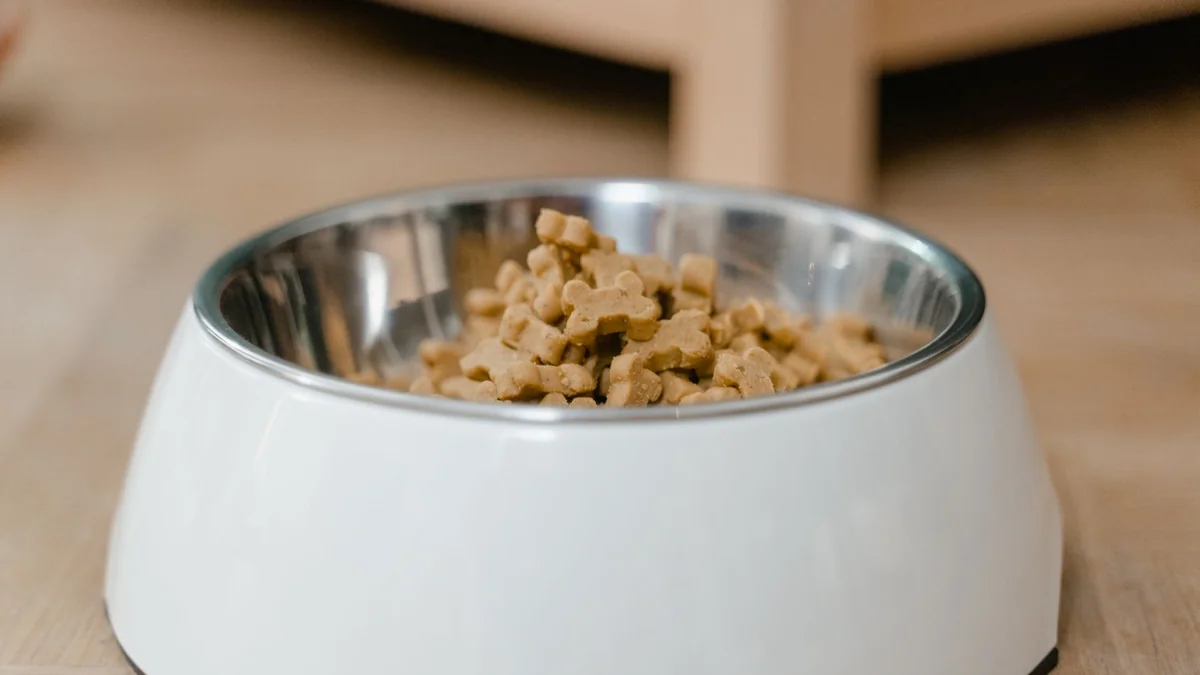
Two bags sit next to each other. One costs twice as much and both say “complete”, “natural” and “with chicken”. The difference between them is entirely in the small print, and the small print follows conventions that nobody explains at the point of sale.
This is general information about pet food, not veterinary advice. Any animal that is unwell, losing weight, or has a suspected food intolerance should be seen by a vet — diet changes made without a diagnosis can delay identifying something else entirely.
Complete Versus Complementary
This is the single most important word on the bag. A complete food provides everything the animal needs and can be fed alone. A complementary food cannot — treats, mixers, and many toppers fall into this category. Feeding a complementary food as a whole diet causes deficiencies over time.
The Ingredient List Is Ordered by Weight
Image source: pexels.com
Ingredients appear in descending order of weight as added, before cooking. That matters, because fresh meat is mostly water. “Fresh chicken 40%” may contribute far less to the finished food than the percentage suggests, once the moisture has been driven off.
Meat Meal Is Not a Lesser Ingredient
Dried meat meal has had the water removed before weighing, so a lower percentage can represent more actual protein than a higher percentage of fresh meat. It sounds less appealing and it is not automatically worse — it simply appears at a different point in the list for the same amount of meat.
Open Versus Closed Labelling
An open label names each ingredient specifically: chicken, rice, beet pulp. A closed label uses category terms such as “meat and animal derivatives” or “cereals”, which permits the manufacturer to vary what goes in between batches. Neither is illegal; open labelling simply tells you more.
Named Species Matter
“Chicken” is a named species. “Poultry” is a group, and “meat and animal derivatives” is broader again. If you are managing a suspected intolerance, only specifically named ingredients let you control what the animal actually receives.
Analytical Constituents
The panel showing protein, fat, fibre, ash and moisture is a legal requirement. Comparing these figures between a wet and a dry food directly is meaningless, because one contains far more water — the comparison has to be made on a dry matter basis, with moisture removed from both.
Ash Is Not an Additive
Ash is what remains after combustion in laboratory analysis, and it represents the mineral content. It is not something added to the food, and a moderate figure is entirely normal.
Percentages Can Be Presented Selectively
A food described as “with chicken” may contain a small proportion. Rules govern how descriptions relate to content, and the phrasing shifts with the percentage. The reliable figure is the one in the ingredient list, not the one on the front of the bag.
Additives and Preservatives
Vitamins, minerals and preservatives are declared, sometimes by category and sometimes by name. “EC permitted antioxidants” is a legal declaration that does not tell you which were used. Manufacturers using natural preservation generally say so specifically.
Feeding Guidelines Are Starting Points
The chart on the bag is an average for a healthy animal at that weight, and individual requirements vary considerably with age, activity and metabolism. Use it as a starting figure and adjust to body condition, as covered under portion sizes.
Marketing Terms Without Legal Meaning
“Natural”, “premium”, “human grade” and “holistic” are not defined terms in pet food and carry no regulatory weight. They tell you about positioning rather than about content.
Where to Check the Rules
UK Pet Food publishes guidance on how pet food is labelled and regulated in the UK, and it is a more reliable reference than manufacturer marketing. For anything relating to your individual animal, PDSA and your own vet are the appropriate sources.
Additives You Might Want to Look For
Prebiotics, joint support ingredients and omega oils are frequently included and declared. Whether they are present in a meaningful quantity is a separate question, and the label rarely tells you. Their presence is a selling point; their dose usually is not stated.
Compare Cost per Day, Not per Bag
Image source: pexels.com
A larger bag looks cheaper and a denser food is fed in smaller quantities. Divide the price by the number of days it will actually feed your animal at the recommended amount, and the ranking between products frequently reverses.
Check the Manufacturer Details
The label must identify who is responsible for the product and provide contact details. If you have a question about ingredients, sourcing or a batch, that is who to ask, and a company unwilling to answer straightforward questions tells you something.
Batch Codes and Best Before Dates
Every bag carries a batch code and a date. Note them when you open a new bag, because if a problem arises the manufacturer will ask, and a recall notice is meaningless if you cannot identify which batch you have. Decanting into a container without keeping the label removes that information entirely.
Storage Affects Quality
Dry food degrades once exposed to air, warmth and light. Fats oxidise, which affects both palatability and nutritional value. Keep it sealed, cool and dry, buy a bag size the animal will finish within a reasonable period, and do not top up an old bag with new food.
Life Stage Labelling
Foods are formulated for growth, adult maintenance, or senior animals, and some are labelled for all life stages. A food adequate for an adult is not necessarily adequate for a growing animal, particularly regarding calcium and phosphorus in larger breeds.
Country of Manufacture and Recalls
Where a food is made and by whom is not always obvious from the packaging, since many brands are produced by third parties. It matters mainly for traceability if a recall occurs, which is another reason to keep the batch information.
Compare Like With Like
When comparing two foods, convert both to dry matter, look at the first five ingredients, check complete versus complementary, and check the feeding quantity — a cheaper food fed in larger amounts is not necessarily cheaper per day. This is the practical basis for judging wet and dry food against each other.