ESOP Financing Guide 2026: How It Works, Benefits & Risks
ESOP financing explained for 2026. Learn how it works, its benefits, risks, and who should use it for employee ownership and business transition.

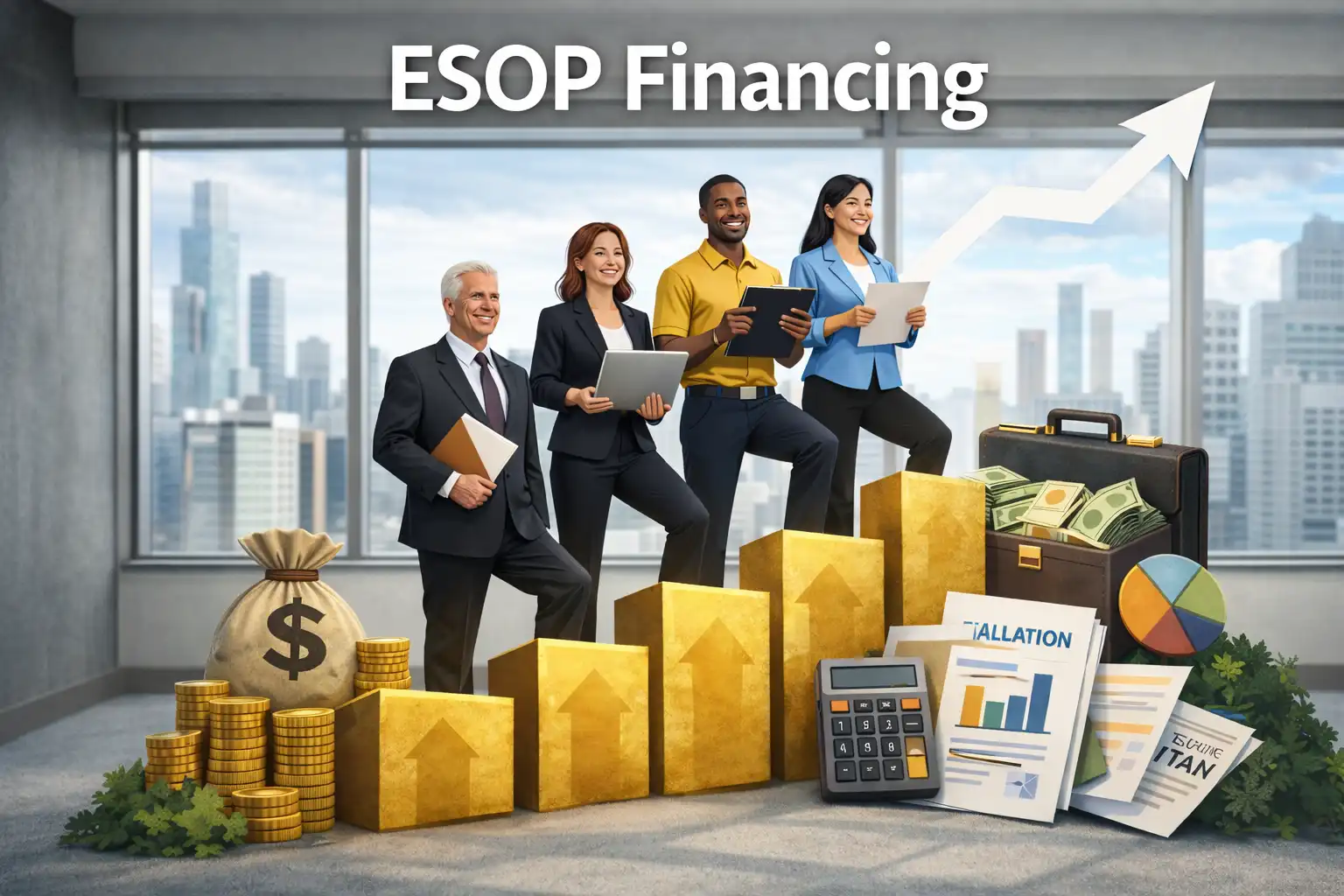
ESOP financing is a way companies fund an Employee Stock Ownership Plan so employees can gradually become owners of the business. Instead of employees buying shares themselves, the company arranges the funding and repays it over time. Many businesses use ESOP financing to plan ownership transitions, keep experienced employees, and maintain long-term stability.
This article explains what ESOP financing is, how it works, why companies use it, and the key benefits and risks involved. It also covers who ESOP financing is best suited for and how it compares with other funding options.
What Is ESOP Financing?
ESOP financing is the process of arranging money so an Employee Stock Ownership Plan can buy company shares.
In an ESOP structure, a trust is created to hold shares on behalf of employees. The trust buys these shares using company funds or borrowed money. Over time, employees receive ownership as a work-related benefit.
Employees do not directly buy the shares. The company funds the plan.
What Is an ESOP?

Image source: pexels.com
An Employee Stock Ownership Plan (ESOP) is a type of employee benefit plan that gives workers ownership in the company through shares. These shares are usually given over time based on salary, years of service, or both.
ESOPs are often used as:
- A retirement benefit
- A succession planning tool
- A way to reward and retain employees
How ESOP Financing Works (Step by Step)
- Company sets up an ESOP trust
The ESOP trust is created to hold shares for employees. - Shares are valued
An independent valuation determines the fair market value of the company. - Financing is arranged
The ESOP trust gets money through:- Company cash, or
- Loans from banks or financial institutions
- ESOP buys company shares
Shares are purchased from existing owners or issued by the company. - Company repays the loan
The company makes regular payments using business cash flow. - Shares are given to employees over time
As the loan is repaid, shares are released and allocated to employees.
Types of ESOP Financing
1. Non-Leveraged ESOP Financing
- No borrowing involved
- Funded using company cash
- Lower risk
- Suitable for companies with strong cash reserves
2. Leveraged ESOP Financing (Most Common)
- Uses bank or external loans
- Allows large share purchases
- Requires careful cash-flow planning
- Common for owner exit or succession
Why Companies Use ESOP Financing
Business Owner Exit
ESOP financing allows owners to sell part or all of their shares gradually instead of selling to outside buyers.
Employee Retention
Employees who own shares often feel more connected to the company and stay longer.
Succession Planning
ESOPs help keep ownership within the company when founders retire.
Business Continuity
Ownership remains internal, which helps protect company culture and values.
Benefits of ESOP Financing
- Employees gain ownership without personal investment
- Improves employee loyalty and motivation
- Helps owners get fair value for their shares
- Supports long-term business stability
- Can offer tax advantages depending on local laws
- Encourages long-term thinking among employees
Risks and Challenges of ESOP Financing
Debt Pressure
Leveraged ESOPs involve loans. If business performance drops, loan repayment can strain cash flow.
Repurchase Obligation
When employees leave or retire, the company must buy back their shares, which creates future cash needs.
Complex Structure

Image source: pexels.com
ESOPs require legal, valuation, accounting, and compliance work.
Not Suitable for All Companies
Startups or companies with unstable earnings may struggle with ESOP financing.
Careful financial planning is essential before setting up an ESOP.
ESOP Financing vs Traditional Business Loans
| Factor | ESOP Financing | Traditional Loan |
|---|---|---|
| Purpose | Employee ownership | Business funding |
| Ownership change | Yes | No |
| Employee benefit | High | None |
| Complexity | High | Medium |
| Long-term impact | Ownership + buybacks | Debt only |
Tax Considerations (General Overview)
Tax treatment depends on local laws, but in many regions:
- Company contributions to ESOPs may be tax-deductible
- Selling owners may receive tax benefits under certain conditions
- Employees usually pay tax only when shares are sold
Because tax rules change, professional advice is always recommended.
Who Should Consider ESOP Financing?
ESOP financing works best for companies that have:
- Stable profits
- Predictable cash flow
- Long-term growth plans
- Owners planning retirement or partial exit
It may not suit:
- Early-stage startups
- Businesses with heavy losses
- Companies with weak cash reserves
Simple Example of ESOP Financing
A company valued at 10 million wants employees to own 30% of the business.
- An ESOP trust is created
- Financing is arranged through a bank loan
- The ESOP buys 30% of the company’s shares
- The company repays the loan over several years
- Employees receive shares gradually as the loan is repaid
Employees gain ownership, and the owner receives value without selling to outside buyers.
Final Verdict
ESOP financing is a powerful ownership and financing tool when used correctly. It supports employee ownership, helps business owners plan exits, and promotes long-term company growth. However, it requires strong financial planning, stable cash flow, and proper legal structure.
FAQs About ESOP Financing
What is ESOP financing?
ESOP financing is a method used to fund an Employee Stock Ownership Plan so it can buy company shares for employees. The funding usually comes from company cash or loans that are repaid over time.
How does ESOP financing work?
An ESOP trust is created to hold shares for employees. The trust uses financing to buy company shares. The company then makes regular contributions to repay the financing, and shares are gradually allocated to employees.
Is ESOP financing the same as an ESOP loan?
No. ESOP financing may involve loans, but it refers to the overall funding structure used to support employee ownership, not just the loan itself.
Do employees have to pay for ESOP shares?
No. Employees typically receive ESOP shares as a benefit. They do not buy the shares with their own money.
Does ESOP financing create debt for the company?
Yes, in a leveraged ESOP, the company usually takes on debt to fund the share purchase. This debt is repaid over time using company cash flow.
How is the value of shares decided in ESOP financing?
The share value is determined by an independent valuation professional who calculates the fair market value of the company.
Can a business owner sell only part of the company through ESOP financing?
Yes. Owners can sell a portion of their shares to the ESOP and keep the remaining ownership. Partial sales are common.
What happens to ESOP shares when an employee leaves the company?
When an employee leaves, retires, or exits the plan, the company usually buys back the vested shares at their current value based on plan rules.
Is ESOP financing better than selling the business?
For owners who want to keep the company independent and reward employees, ESOP financing can be a strong alternative. However, it may not suit every business.
Is ESOP financing risky?
ESOP financing involves financial and operational risks, especially related to debt repayment and future share buybacks. Proper planning helps reduce these risks.