Cereal Dispensers: What They Are Good For and What They Crush
Capacities, mechanisms and UK prices, plus the honest answer on which cereals a dispenser will destroy.

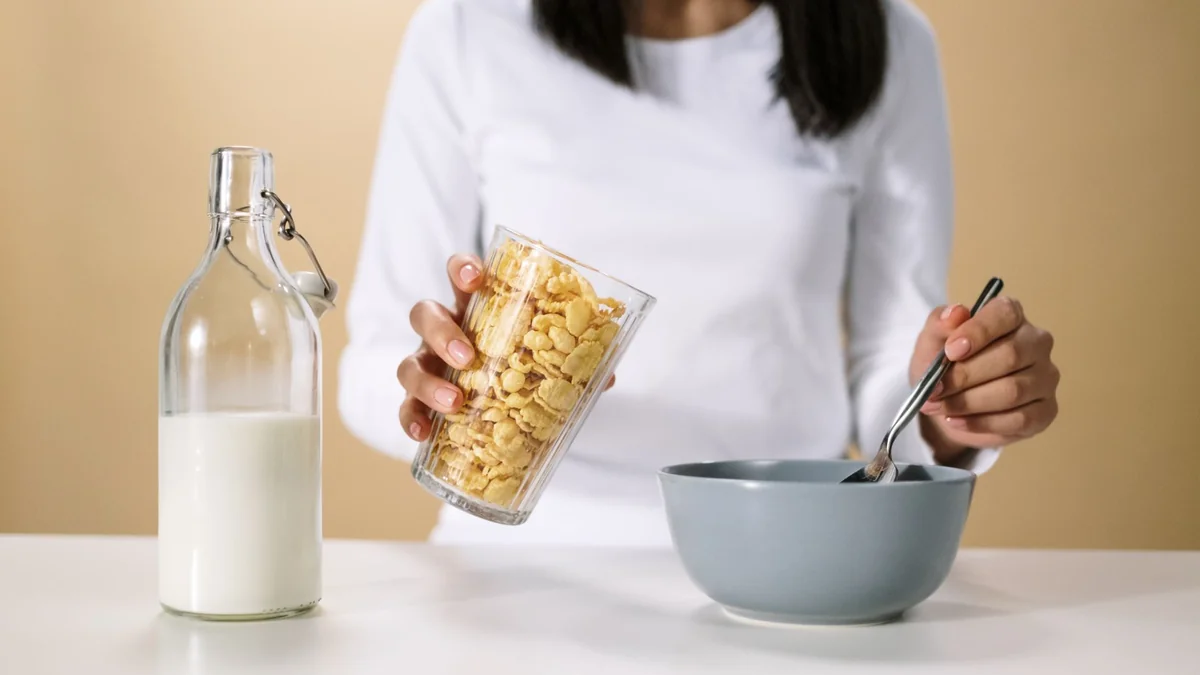
The cereal dispenser is one of those objects that looks like an upgrade to your kitchen and occasionally turns out to be a machine for producing dust. Whether you end up with the first or the second depends almost entirely on two things nobody mentions in the product photos: which mechanism it uses, and what you were planning to put in it.
They are worth buying for the right household. A family getting through several boxes a week, a kitchen where cupboard space has run out, a house with children old enough to serve themselves. They are a poor buy for a Weetabix household, and the reason is mechanical rather than a matter of taste.
What You Can Actually Buy in the UK
The domestic market runs from roughly two litres to about five. Argos list a Swan 3.5 litre unit and an Argos Home five-litre model sold as a set of three. Dunelm sell single dispensers described as suitable for cereal, pasta and similar dry goods, dishwasher safe. Lakeland stock a clip-lid 3.7 litre version with an airtight seal and a pour spout, carrying a three-year guarantee and a 4.8 out of 5 customer rating.
A three-and-a-half litre canister takes roughly a standard large box of cereal, which is the useful mental conversion. Five litres takes a box and a bit. If you are buying a set of three for a family, that is about a week of breakfast for four people, decanted.
The Mechanism Is the Whole Decision
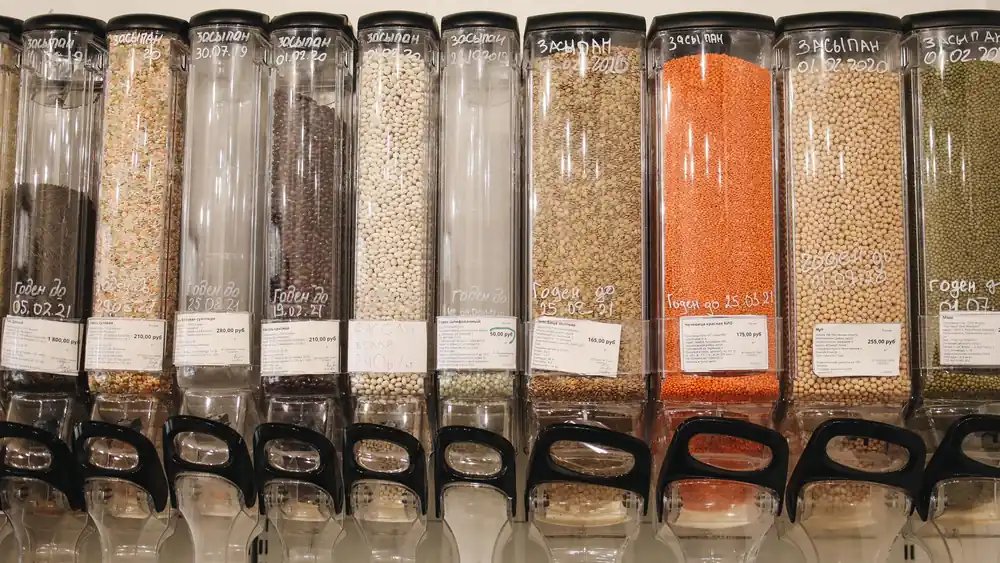
Image source: pexels.com
There are broadly three ways these things release cereal, and they behave very differently.
The turn-knob or paddle-wheel type has a rotating drum at the base with segments that carry cereal round and drop it out. It gives you portion control and it is the design most likely to break your flakes, because anything that does not fit a segment gets caught between the drum and the housing.
The spring-loaded lever type opens a gate when you press it. Better ones have a lever on both sides so left- and right-handed people can use them one-handed. The push-down variants generally treat delicate cereal better because nothing rotates against it.
The trapdoor or chute design simply opens a flap and lets gravity do the work. It gives you the least control over portion size and does the least damage. For large or fragile cereal it is the one to look for.
The Cereals That Do Not Survive
This is the part reviews are blunt about and packaging is silent on. Frosted flakes and similar thin, sugar-coated flakes come out visibly broken from a paddle-wheel dispenser. Anything shaped like a small ring or ball, Cheerios being the obvious example, moves through almost any mechanism intact.
Large wheat biscuits are the real British problem. Weetabix, Shreddies in quantity, and the bigger own-brand equivalents either jam the mechanism or come out in pieces. If that is what your household eats, a dispenser is the wrong purchase and a plain airtight container is the right one.
Granola and muesli sit in between. Loose granola dispenses well; the clustered kind breaks up, which some people mind and others do not. Dried fruit in a muesli tends to stick around the outlet and needs an occasional poke.
Airtightness Is the Real Benefit
Set aside the theatre of pouring and the genuine advantage is that a sealed canister keeps cereal crisp considerably longer than a folded bag inside a cardboard box. In a damp kitchen that difference is measured in weeks rather than days.
It also removes the half-empty box problem, where three boxes each hold a handful and all three occupy shelf. Decanting is what actually recovers the space, and the dispenser is just a container that pours.
Cleaning, Honestly
Most models come apart into three or four pieces and go back together without difficulty, which is genuinely one of the better things about them. The base plate collects crumbs and sugar dust and wants wiping every few refills, more often with anything coated.
Dishwasher safety varies and is worth checking rather than assuming, since the mechanism housing on some models is not. The important habit is to let everything dry completely before refilling. Damp plus cereal dust is how you get the sticky residue that jams the drum.
Do Not Top Up on Top of Old Cereal
The stock rotation problem is real. Pouring a new box onto whatever is left means the oldest cereal sits at the bottom indefinitely and goes stale where you cannot see it. Empty it, wipe it, refill it. It takes a minute and it is the single most common way these get unpleasant.
They Are Not Just for Cereal
Rice, pasta shapes, porridge oats, flour, nuts, popcorn kernels, sweets and dry dog food all work, and several are better suited than cereal because they are not fragile. A dispenser on a utility shelf holding kibble is arguably a better use than one on a worktop holding cornflakes.
If you are decanting pet food, keep the original packaging or photograph it. Batch codes and best before dates live on the bag, and once it is in a canister that information is gone. That matters more than people expect, as covered in reading a pet food label.
Wall-Mounted and Commercial Versions
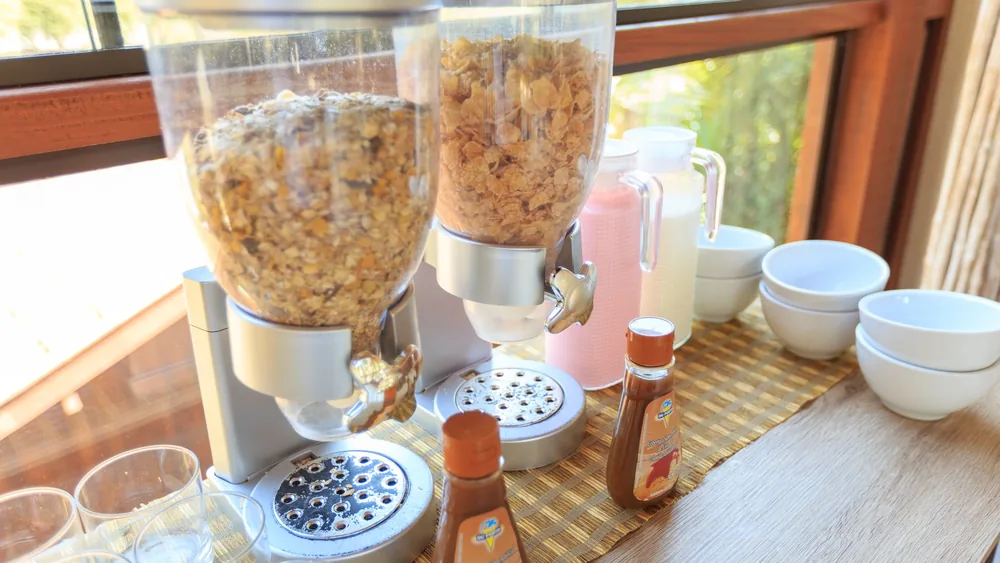
Image source: pexels.com
Wall-mounted units free the worktop entirely and are common in hotel breakfast rooms and self-service cafeterias, usually in twin or triple configurations with gravity bins. They need proper fixing into something solid, because a full five-litre canister is heavier than it looks and the mounting takes the load every time someone operates it.
Anywhere serving the public, the equipment sits inside a wider set of obligations around cleaning, structure and self-service hygiene. Those requirements are set out under the Food Safety and Hygiene (England) Regulations 2013, and a dispenser that cannot be dismantled and cleaned properly is a liability rather than a convenience.
What to Check Before Buying
Whether it fits under your wall units, which catches people out constantly with the taller five-litre models and is worth measuring at the same time as anything else in planning a contemporary kitchen. Whether the lid seals with a clip or just sits on. Whether the mechanism can be removed for cleaning. Whether there is a drip tray or ledge, since some spillage is inevitable.
And whether it is transparent. Opaque canisters look tidier and mean you discover you have run out at seven in the morning. A clear body, or at least a window, is worth more than the aesthetic gain.
The Portion Control Argument
Some dispensers are sold on measured portions, roughly a bowl per full turn. It works well enough for uniform cereal and poorly for anything mixed, where the segments fill unevenly. If controlling how much gets eaten is genuinely the point, a set of scales in the cupboard is more honest and considerably cheaper.
Is It Worth It
For a household eating ring or ball-shaped cereal in volume, yes. The freshness gain is real, the space gain is real, and children can serve themselves without tipping half a box across the worktop.
For a household eating wheat biscuits, or one that gets through a box a fortnight, no. You are buying a mechanism you do not need to solve a problem you do not have, and the cereal will be worse for having gone through it.
If you do buy, spend slightly more for a clip-sealed lid and a mechanism you can take out. Those two features are the difference between something still in use in three years and something in the back of a cupboard by March.