Startup Loan Interest Rates: What UK Founders Should Expect When Borrowing
Startup loan interest rates in the UK: typical borrowing costs, what affects your rate, and what founders should check before signing.

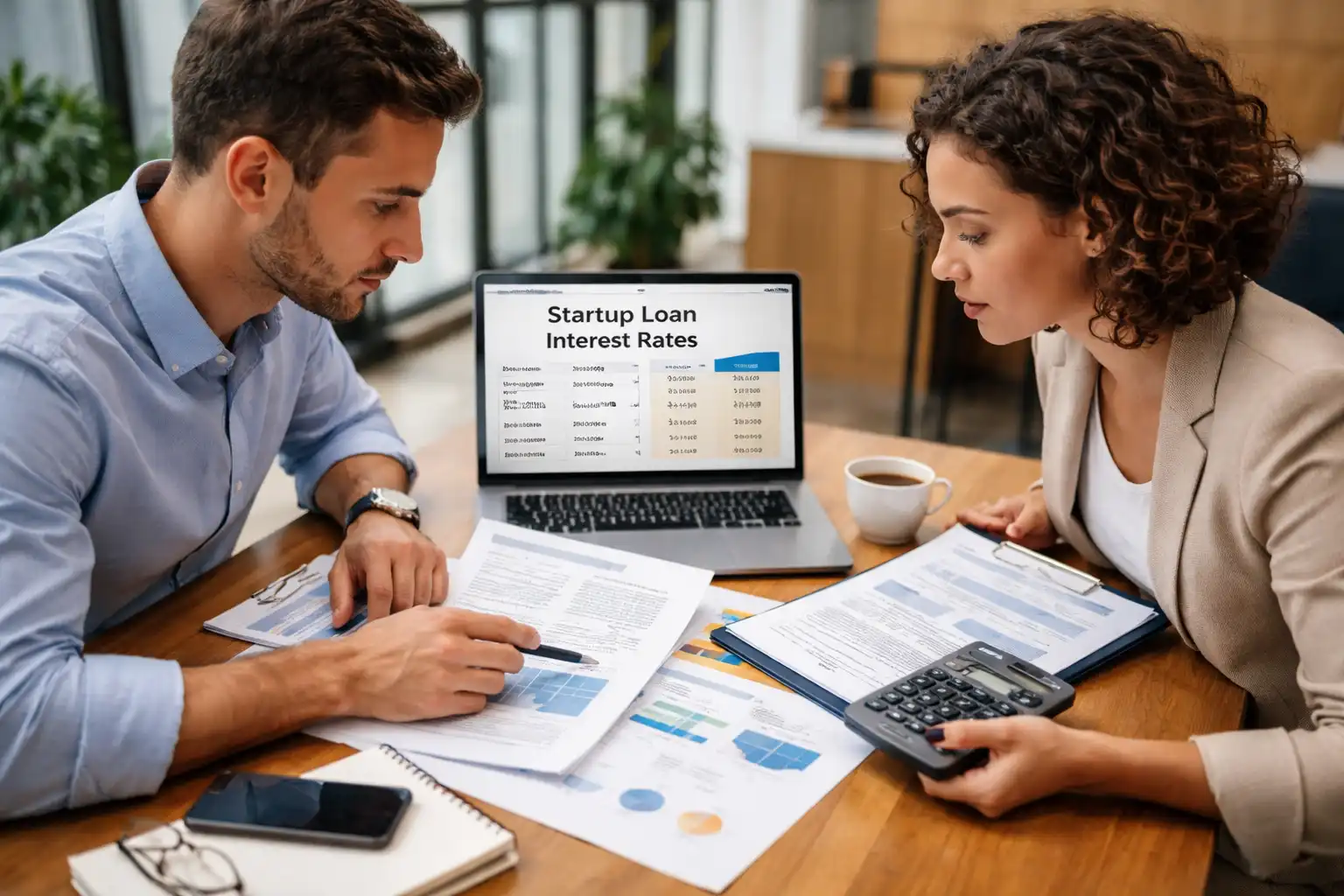
When founders consider taking a startup loan, the first question is usually about the amount they can borrow. But experienced entrepreneurs know that another factor matters just as much — the interest rate.
Interest rates determine the true cost of borrowing money. A loan may look attractive on paper, but if the interest rate is too high, the total repayment amount can significantly increase over time.
For startups, understanding startup loan interest rates is particularly important because early-stage businesses often operate with limited cash flow. Monthly repayments must be manageable while the company is still growing and generating revenue.
Interest rates vary widely depending on the lender, the borrower’s credit profile, and the type of loan involved. Government-backed loans often offer lower rates, while alternative lenders may charge higher rates in exchange for faster approvals or fewer requirements.
In this guide, we’ll explore how startup loan interest rates work in the UK, what factors influence borrowing costs, and how founders can secure more favourable loan terms.
Because when it comes to startup financing, the interest rate often determines whether a loan becomes a useful tool or a financial burden.
What Startup Loan Interest Rates Mean
Startup loan interest rates represent the percentage charged by lenders for borrowing money.
Interest is essentially the cost of accessing capital. Lenders charge interest as compensation for the risk of lending money to a borrower.
For startups, the interest rate determines:
- how much extra money must be repaid
- the size of monthly repayments
- the total cost of the loan over time
A higher interest rate means the borrower will pay significantly more over the life of the loan.
Understanding how these rates work helps founders choose financing options more wisely.
Typical Startup Loan Interest Rates in the UK
Image source: pexels.com
Startup loan interest rates vary depending on the lender and loan type.
Here is a general overview of common loan categories.
| Loan Type | Typical Interest Rate |
| Government Startup Loans | Around 6% fixed |
| Bank Business Loans | 5% – 10% |
| Online Lenders | 7% – 25% |
| Peer-to-Peer Lending | 6% – 15% |
Government-backed loans often offer the most favourable interest rates because they are designed to support entrepreneurship.
Alternative lenders may charge higher rates due to increased risk and faster approval processes.
Factors That Affect Startup Loan Interest Rates
Several factors influence the interest rate a startup receives.
Personal Credit Score
The founder’s personal credit history plays a major role in determining interest rates.
Applicants with strong credit scores typically receive lower rates because lenders view them as lower risk.
Business Plan and Financial Projections
A strong business plan and realistic financial forecasts demonstrate that the business has a credible strategy for generating revenue.
This can increase lender confidence and improve loan terms.
Loan Amount
Larger loans may sometimes carry different interest rates depending on the lender’s risk assessment.
Repayment Term
Loans with longer repayment periods may have slightly higher interest rates because lenders face greater long-term risk.
Collateral
Secured loans backed by assets often have lower interest rates compared with unsecured loans.
If you’re exploring collateral-free financing, our guide on unsecured startup loans explains how these loans differ.
Fixed vs Variable Interest Rates
Startup loans typically offer two types of interest rate structures.
Fixed Interest Rates
Fixed rates remain the same throughout the life of the loan.
Advantages include:
- predictable monthly repayments
- easier financial planning
- protection against rising interest rates
Government startup loans often use fixed rates.
Variable Interest Rates
Variable rates fluctuate depending on market conditions.
Advantages include:
- potentially lower initial rates
- flexibility if interest rates decrease
However, variable rates also create uncertainty because monthly repayments may increase.
How Interest Rates Affect Loan Costs
Even small differences in interest rates can significantly affect the total cost of borrowing.
Consider the following simplified example.
| Loan Amount | Interest Rate | Total Repayment (Approx.) |
| £20,000 | 6% | £23,200 |
| £20,000 | 12% | £26,600 |
In this example, doubling the interest rate increases the total repayment by more than £3,000.
This illustrates why comparing loan interest rates carefully is essential before borrowing.
Government Startup Loan Interest Rates
One of the most accessible funding options for UK entrepreneurs is the government-backed Startup Loans programme.
This programme typically offers:
- fixed interest rates of around 6%
- loans of up to £25,000 per founder
- repayment terms of up to five years
- mentoring support for entrepreneurs
Government programmes often offer lower interest rates because their goal is to support business growth rather than maximise profit.
If you’re exploring this option further, our guide on government startup loans explains how the programme works.
How to Get Lower Startup Loan Interest Rates
Entrepreneurs can improve their chances of receiving favourable loan terms by preparing carefully before applying.
Improve Personal Credit Score
Maintaining strong credit history increases lender confidence.
Develop a Strong Business Plan
A clear business strategy demonstrates that the startup has potential for success.
Compare Multiple Lenders
Different lenders offer different interest rates and loan conditions.
Comparing offers helps founders find the best option.
Consider Secured Loans
Providing collateral may reduce interest rates because it lowers lender risk.
Taking these steps can significantly improve borrowing terms.
Hidden Costs to Consider
Interest rates are not the only cost associated with startup loans.
Entrepreneurs should also review additional loan fees such as:
- application fees
- origination fees
- early repayment penalties
- late payment charges
These costs can increase the total price of borrowing.
Carefully reviewing loan agreements helps avoid unexpected financial surprises.
When High Interest Rates May Still Make Sense

Image source: pexels.com
While lower interest rates are always preferable, some startups still accept higher borrowing costs under certain circumstances.
For example:
- when fast access to capital is necessary
- when alternative funding options are unavailable
- when the loan will generate rapid business growth
If a loan enables the startup to generate significantly more revenue than the borrowing cost, it may still be a worthwhile financial decision.
Common Mistakes Founders Make
Many entrepreneurs make avoidable mistakes when evaluating startup loan interest rates.
Focusing Only on Loan Amount
Some founders prioritise large loan amounts without considering the total cost of borrowing.
Ignoring Repayment Terms
Longer repayment terms may increase total interest payments.
Not Comparing Lenders
Accepting the first loan offer without comparison may result in higher interest costs.
Avoiding these mistakes helps founders make smarter borrowing decisions.
Compare Total Cost, Not Headline Rates
A lower advertised rate can still cost more overall once arrangement fees, the term length and any early repayment charges are counted. Ask each lender for the total amount repayable over the full term and compare that single figure. Rates quoted in articles, including this one, go stale — always confirm current terms directly with the lender.
Final Thoughts
Understanding startup loan interest rates is essential for entrepreneurs seeking business financing.
Interest rates directly influence the cost of borrowing and the long-term financial health of the business.
While government-backed programmes often offer lower rates, alternative lenders may provide faster access to capital with higher costs.
By improving credit profiles, preparing strong business plans, and comparing loan options carefully, founders can secure more favourable borrowing terms.
Because when it comes to startup loans, the goal isn’t simply to access funding.
It’s to ensure that the cost of borrowing supports the growth of the business rather than holding it back.
FAQs
What are startup loan interest rates?
Startup loan interest rates represent the percentage lenders charge borrowers for accessing capital.
What is the average interest rate for startup loans?
Interest rates vary depending on the lender but often range between 5% and 25%.
Are government startup loan interest rates lower?
Yes. Government-backed startup loans often offer lower fixed interest rates compared with private lenders.
Can founders negotiate startup loan interest rates?
In some cases, lenders may offer better terms if the borrower has strong credit history or collateral.
Do unsecured startup loans have higher interest rates?
Yes. Because unsecured loans carry more risk for lenders, they often have higher interest rates.
Author Bio
Rajiv Gupta has more than 10 years of experience in digital media and online publishing. He runs Union Post, which covers UK business, finance and entertainment.
Disclaimer
This article is for informational purposes only and does not constitute financial or investment advice. Readers should conduct independent research or consult qualified financial professionals before making financial or business decisions.